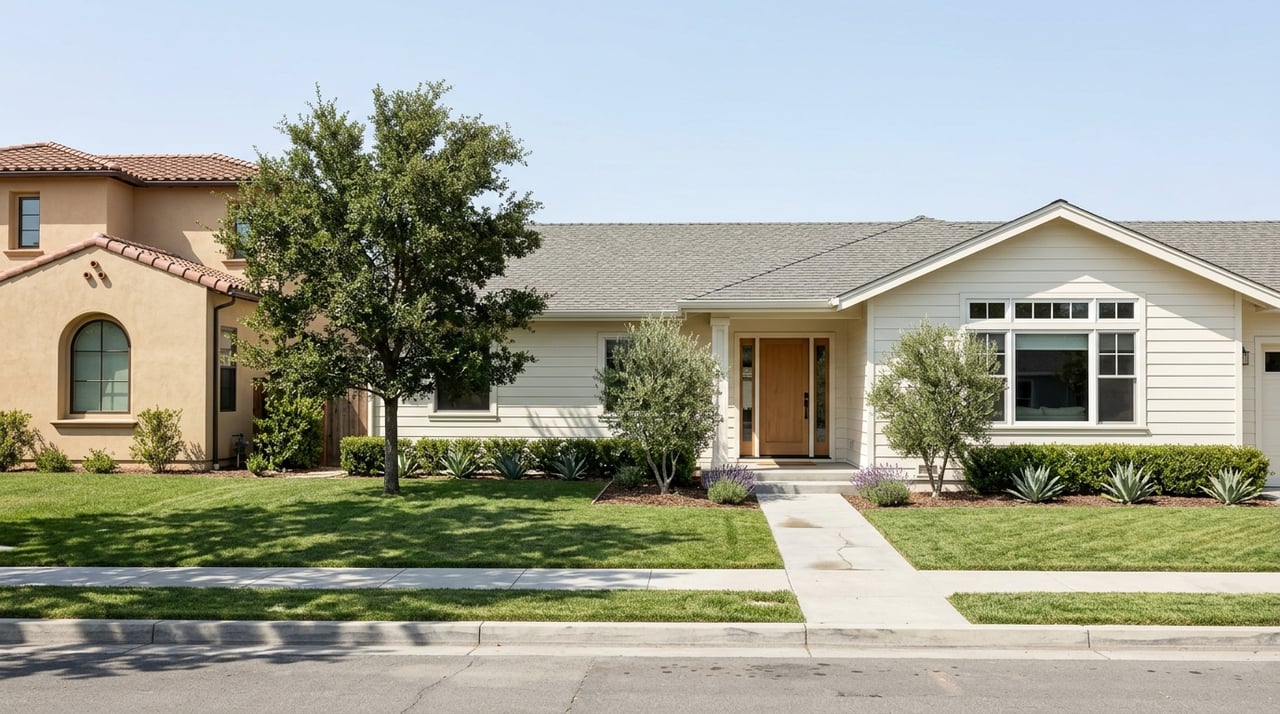
Trying to decide between East Dublin and West Dublin? You are not alone. Many buyers narrow in on Dublin for its location and convenience, then realize the city offers two very different neighborhood experiences depending on which side you focus on. This guide will help you compare housing style, neighborhood layout, shopping access, commute patterns, and the feel of each area so you can make a more confident move. Let’s dive in.
East Dublin at a glance
East Dublin is best understood through the city’s Eastern Dublin planning area, which was adopted in 1993 and later updated. It is the city’s major long-range growth area, covering about 3,300 acres and planning for roughly 14,296 dwelling units.
In practical terms, that means East Dublin is where you will find the clearest pattern of newer construction and master-planned growth. If you like neighborhoods that feel more consistent in age, layout, and design, this side of Dublin will likely stand out to you.
West Dublin at a glance
West and central Dublin tell a different story. The city’s historic record points to major suburban housing growth beginning in the early 1960s, and the Dublin Village Historic Area reflects an effort to preserve older local resources.
At the same time, West Dublin is not just about older homes. Downtown Dublin has been evolving with a new town square vision, a changing street grid, and newer transit-oriented projects like Aster and Connolly Station. That mix gives this side of town a more layered feel.
Housing age and neighborhood feel
East Dublin feels newer and more planned
If your priority is newer housing, East Dublin is usually the stronger match. The city’s planning documents show a residential pattern that is still mostly single-family, while also including attached and in-town housing in selected areas.
You will often notice more uniform streetscapes and a more intentional neighborhood layout here. Communities like Wallis Ranch show that pattern clearly, with organized internal streets, open-space and park parcels, and shared community features built into the plan.
West Dublin feels more varied
West and central Dublin offer more variety in housing age and neighborhood structure. You may see older suburban tracts, historic blocks, newer infill projects, and transit-oriented housing within the same broader area.
That variety can appeal to buyers who want options instead of one consistent development pattern. It can also mean that two nearby neighborhoods feel quite different from one another in lot size, street layout, and home style.
Home styles and lot layouts
East Dublin has more standardized layouts
East Dublin tends to reflect planned-community design. In Wallis Ranch, for example, the city-approved guidelines outline lot dimensions, setbacks, building height, private outdoor space, and common outdoor areas.
Those same guidelines reference styles such as Traditional Farmhouse, Contemporary Farmhouse, West Coast Classic, California Modern, Bay Area Contemporary, and Napa Valley Classic. For you as a buyer, that usually translates to a more consistent look and a more predictable neighborhood layout.
West Dublin has a broader mix
West and central Dublin do not follow one single template. The historic area focuses on preserving older character, while downtown planning introduces a more connected street grid and town-square framework.
That means lot patterns can vary more from one pocket to another. You may find older blocks, established suburban streets, and some newer planned enclaves like Schaefer Ranch, all within the west side story.
Shopping and daily convenience
West Dublin is closer to the original downtown core
If you want shopping and dining tied closely to a traditional downtown setting, West and central Dublin may feel more convenient. The city groups much of this activity around Downtown Dublin near West Dublin BART, including Dublin Place, Dublin Retail Center, Shamrock Village, Village Parkway, Valley Plaza, and Amador Plaza Road.
The city is also pushing for a more pedestrian-oriented downtown experience in this area. For some buyers, that smaller-radius access to errands, dining, and transit is a real advantage.
East Dublin has larger retail clusters
East Dublin’s retail pattern is more center-based and spread across major corridors. The city highlights destinations such as Hacienda Crossings, Persimmon Place, Grafton Station, Shops at Waterford, Ulferts Center, Fallon Gateway, and Tivoli Plaza.
If you prefer larger shopping centers and broad retail choices near newer residential growth, East Dublin may fit your routine well. The feel is less about one historic commercial core and more about multiple modern shopping hubs.
Commute access and transit
West Dublin has strong downtown and BART proximity
Dublin sits at the crossroads of Interstate 580 and Interstate 680, which is one reason the city remains popular with commuters. Downtown Dublin is near both freeways, and the city notes partial I-680 access through Amador Plaza Road and Village Parkway.
West and central Dublin are also closely tied to the West Dublin/Pleasanton BART station. If your goal is to stay near downtown services and one of the city’s BART access points, this side may deserve extra attention.
East Dublin leans more on I-580 access
East Dublin is also freeway-oriented, but the pattern leans more heavily toward Interstate 580. The Eastern Dublin planning area is served by I-580, with interchanges at Hacienda Drive, Tassajara Road and Santa Rita Road, Fallon Road and El Charro Road, and Airway Boulevard.
East Dublin is also served by the Dublin/Pleasanton BART station at Demarcus Boulevard and Iron Horse Parkway. For many buyers, the choice comes down to whether you prefer east-side neighborhood style or west-side proximity to the older downtown core.
HOA patterns and community structure
East Dublin is more likely to feel HOA-driven
If you are comparing community structure, East Dublin is where HOA-style living is most visible in city records. Wallis Ranch is a strong example, with private streets and homeowners’ association maintenance responsibilities for certain streets and landscape features.
That does not mean every East Dublin home will come with the same setup, but it does show a common pattern in newer planned communities. If you value managed common areas and organized neighborhood amenities, this may be a plus.
West Dublin is more subdivision-specific
West and central Dublin are more mixed when it comes to HOA exposure. Because this side includes historic-area properties, older suburban tracts, downtown redevelopment, and transit-oriented projects, the presence of an HOA is more likely to depend on the specific neighborhood or development.
For you, that means more case-by-case homework. Two homes in West Dublin may have very different ownership structures, dues, or neighborhood management models.
East Dublin vs West Dublin: quick comparison
| Category | East Dublin | West / Central Dublin |
|---|---|---|
| Housing age | Generally newer | Older overall, with some newer infill and transit-oriented projects |
| Neighborhood pattern | More master-planned | More varied and layered |
| Lot layout | More standardized | More mixed by area |
| Shopping style | Larger retail centers | Downtown-oriented shopping and dining |
| Commute pattern | Strong I-580 access, near Dublin/Pleasanton BART | Near I-580, I-680, and West Dublin/Pleasanton BART |
| HOA visibility | More common in planned communities | More dependent on the subdivision |
Which side may fit you best?
East Dublin may work better if you want newer homes
East Dublin often makes sense if you are drawn to newer construction, more consistent neighborhood design, and planned communities with shared amenities or HOA-managed features. It can also be a strong fit if you like having major retail centers nearby and want a more contemporary suburban layout.
For buyers who value predictability in neighborhood design, East Dublin usually offers the clearest version of that experience in Dublin.
West Dublin may work better if you want variety
West and central Dublin may be the better fit if you prefer a neighborhood with more variation, older residential patterns, or closer ties to downtown Dublin and West Dublin BART. This side can appeal to buyers who want choices across different home ages, development types, and block layouts.
It can also be a smart place to look if being closer to the city’s older commercial core matters to your day-to-day lifestyle.
The bottom line on East vs West Dublin
There is no single city-issued East Dublin versus West Dublin label, so the most useful comparison comes from the city’s planning areas and development patterns. Viewed that way, East Dublin is generally newer, more master-planned, and more HOA-visible, while West and central Dublin are older overall and more varied in housing type, layout, and proximity to downtown amenities.
If you are deciding between the two, the right answer usually comes down to how you want to live. Some buyers want newer communities and a more uniform setting. Others want a broader mix of housing styles, easier access to downtown Dublin, or a neighborhood with more layers and change over time.
If you want help comparing Dublin neighborhoods in a practical, property-by-property way, Kory Madge can help you narrow down the right fit for your goals.
FAQs
What is the main difference between East Dublin and West Dublin?
- East Dublin is generally newer and more master-planned, while West and central Dublin are older overall and more varied in neighborhood layout, housing age, and development style.
Is East Dublin newer than West Dublin?
- Yes. East Dublin is tied to the city’s long-range growth area, while much of West and central Dublin includes older suburban growth that began expanding in the early 1960s.
Does West Dublin have better BART access than East Dublin?
- West and central Dublin are more closely tied to the West Dublin/Pleasanton BART station, while East Dublin is also served by the Dublin/Pleasanton BART station.
Are HOAs more common in East Dublin neighborhoods?
- In general, yes. City documents show stronger HOA visibility in newer East Dublin planned communities, while West Dublin HOA exposure is more dependent on the specific subdivision.
Which side of Dublin has more shopping centers?
- East Dublin has more large retail clusters, while West and central Dublin are more closely tied to the original downtown shopping and dining areas.
Is West Dublin only older housing?
- No. West and central Dublin include older neighborhoods, but they also include newer infill, transit-oriented development, and some newer planned communities such as Schaefer Ranch.